Gelatin capsules are made from animal collagen, usually from cows or pigs. Vegetarian capsules are usually made from hypromellose (HPMC), a plant-based cellulose. Vegetarian capsules suit vegans and people avoiding pork, and hold less moisture. Both dissolve in the stomach. Check “Other ingredients” on the label to see which one a product uses.
Affiliate disclosure: we may earn a commission from qualifying purchases through links on this page, at no extra cost to you. We also earn a commission from Nature’s Ability, a brand we have worked with. Read our disclosure.
What each capsule is made from
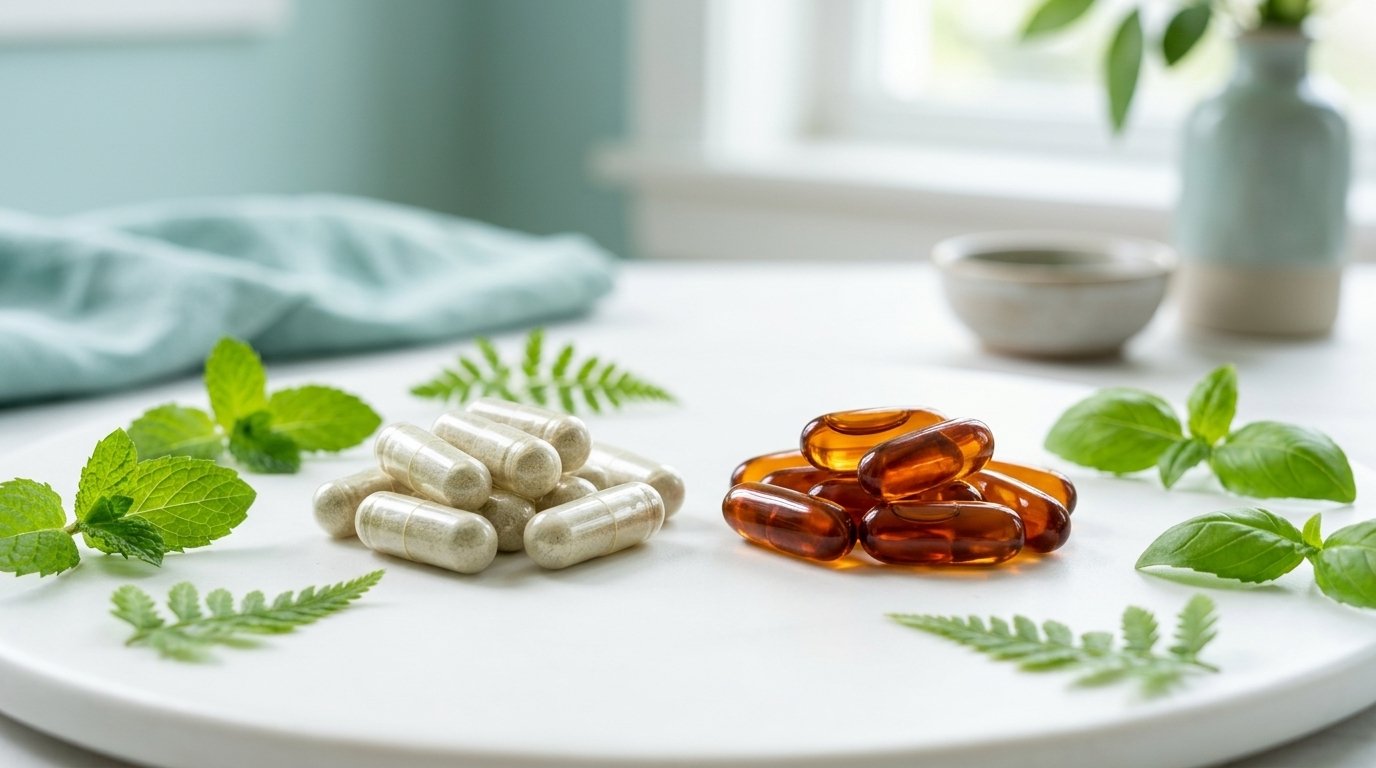
- Gelatin capsules are made from collagen taken from animals, usually cow (bovine) or pig (porcine) sources, and sometimes fish.
- Vegetarian capsules are usually made from hypromellose, also called HPMC (hydroxypropyl methylcellulose), a material made from plant cellulose. On a label, look for “hypromellose” or “vegetable cellulose”.
Side-by-side comparison
| Gelatin | Vegetarian (HPMC) | |
|---|---|---|
| Source | Animal collagen (cow, pig or fish) | Plant cellulose |
| Vegetarian or vegan | No | Yes |
| Halal and kosher | Only if specially sourced and certified | Plant-based, often certified; check the label |
| Moisture in the shell | Higher, about 13–16% | Lower, about 2–8% |
| Typical use | Common, lower cost; softgels for oils | Vegan products and moisture-sensitive ingredients |
Diet and religious needs
If you’re vegetarian, vegan, or avoid pork for religious reasons, check the “Other ingredients” line. Gelatin from pork isn’t halal or kosher. Bovine gelatin can be, but only if it’s certified. Plant-based HPMC capsules avoid the issue, and many carry halal and kosher certification, though certification depends on the manufacturer, so look for it on the label.
Stability and moisture
HPMC shells hold much less water than gelatin shells. Capsule maker Capsugel notes this makes them less brittle in dry conditions and better suited to moisture-sensitive ingredients. That’s one reason they’re popular for probiotics and powdered herbs.
Does one work better?
For most supplements, the capsule shell isn’t what decides whether you get the ingredient. Both types dissolve in the stomach, though gelatin tends to dissolve slightly faster. Choose based on your diet, beliefs and the product itself.
How to spot the capsule type on a label
Look below the Supplement Facts box at “Other ingredients”:
- “Hypromellose”, “vegetable capsule” or “vegetarian capsule” means plant-based.
- “Gelatin” or “bovine gelatin” means animal-based.
A magnesium blend in vegetarian (hypromellose) capsules. Read the full Supplement Facts and safety information on the product page before use. Disclosure: we earn a commission from Nature’s Ability and have worked with the brand.
View Nature’s Ability Premium Multi Mag →If you fill your own capsules with powders, HPMC capsules are widely available. Check the size (for example 00 or 0) and that they’re labeled hypromellose.
Browse empty vegetarian capsules on Amazon →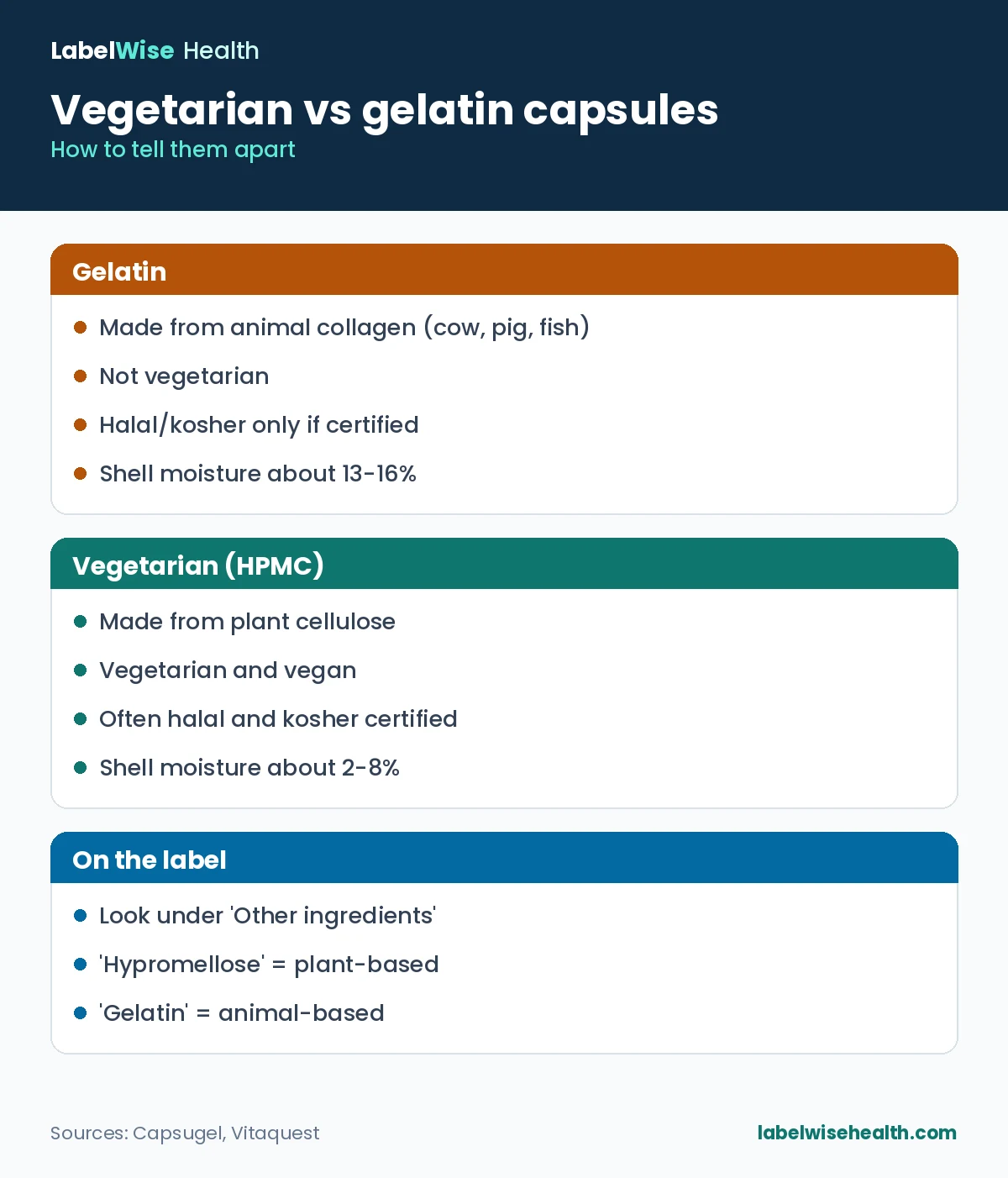
Frequently asked questions
What are vegetarian capsules made of?
Usually hypromellose (HPMC), a material made from plant cellulose. Some use pullulan, which comes from fermented starch.
Are gelatin capsules halal?
Only if the gelatin comes from a halal-certified source. Pork gelatin isn’t halal. Check the label or contact the brand.
Do vegetarian capsules dissolve as well as gelatin?
Both dissolve in the stomach. Gelatin tends to dissolve slightly faster, but for most supplements the difference doesn’t matter.
How do I know if my supplement uses gelatin?
Check the Other ingredients line under the Supplement Facts box for ‘gelatin’ or ‘hypromellose’.
Why are vegetarian capsules better for some products?
Their shells contain less moisture, which suits moisture-sensitive ingredients like probiotics.
Sources
- Capsugel: Gelatin vs HPMC capsules (moisture, halal and kosher)
- Vitaquest: Vegan vs gelatin capsules
- CapsCanada: Gelatin vs HPMC capsules
- Nature’s Ability: Premium Multi Mag (Other ingredients)
This article is for general information and is not medical advice. These statements have not been evaluated by the Food and Drug Administration. Supplements are not intended to diagnose, treat, cure, or prevent any disease. Talk to your healthcare provider before starting any supplement.