Most vitamins don’t become dangerous after their expiration date. They slowly lose potency, so you may get less than the label says. The FDA doesn’t require expiration dates on supplements, but if a brand prints one, it must be backed by stability data. Tablets and capsules stored cool and dry last longest. Throw out anything that smells, looks or feels different.
Affiliate disclosure: we may earn a commission from qualifying purchases through links on this page, at no extra cost to you. Read our disclosure.
What the date on the bottle means
Unlike prescription and over-the-counter medicines, the FDA doesn’t require dietary supplements to carry an expiration date. Most brands include one anyway, often written as “best by” or “use by”. If a brand does print a date, FDA manufacturing rules require it to be backed by stability testing data.

What happens after the date
- Potency drops. The main change is that the vitamins slowly lose strength, so you may get less than the label says.
- They don’t usually become toxic. Medical News Today and other health sources note that expired vitamins are generally not dangerous, just less effective.
- The rate depends on form and storage. Tablets and capsules tend to last longer than gummies and liquids. Heat, light, air and moisture speed things up.
When to throw them out
Bin a supplement, whatever the date, if you notice:
- a change in smell, color or texture
- gummies that are sticky, melted or stuck together
- capsules that are soft, cracked or leaking
- fish oil that smells strongly fishy or rancid
- signs of moisture or mold in the bottle
How to make vitamins last longer
- Keep them in the original bottle, with the lid tight and any desiccant packet inside.
- Store them somewhere cool, dry and dark, like a bedroom drawer, not the bathroom.
- Buy sizes you’ll finish before the date.
- Write the opening date on the bottle.
More tips in our guide to how to store vitamins.
How to dispose of old supplements
Don’t leave them where children or pets can reach them. Many pharmacies and community drug take-back events accept old medicines and supplements; check your local options.
Small opaque containers with tight lids help keep out light and moisture if you decant supplements. Keep the original label information.
Browse airtight pill containers on Amazon →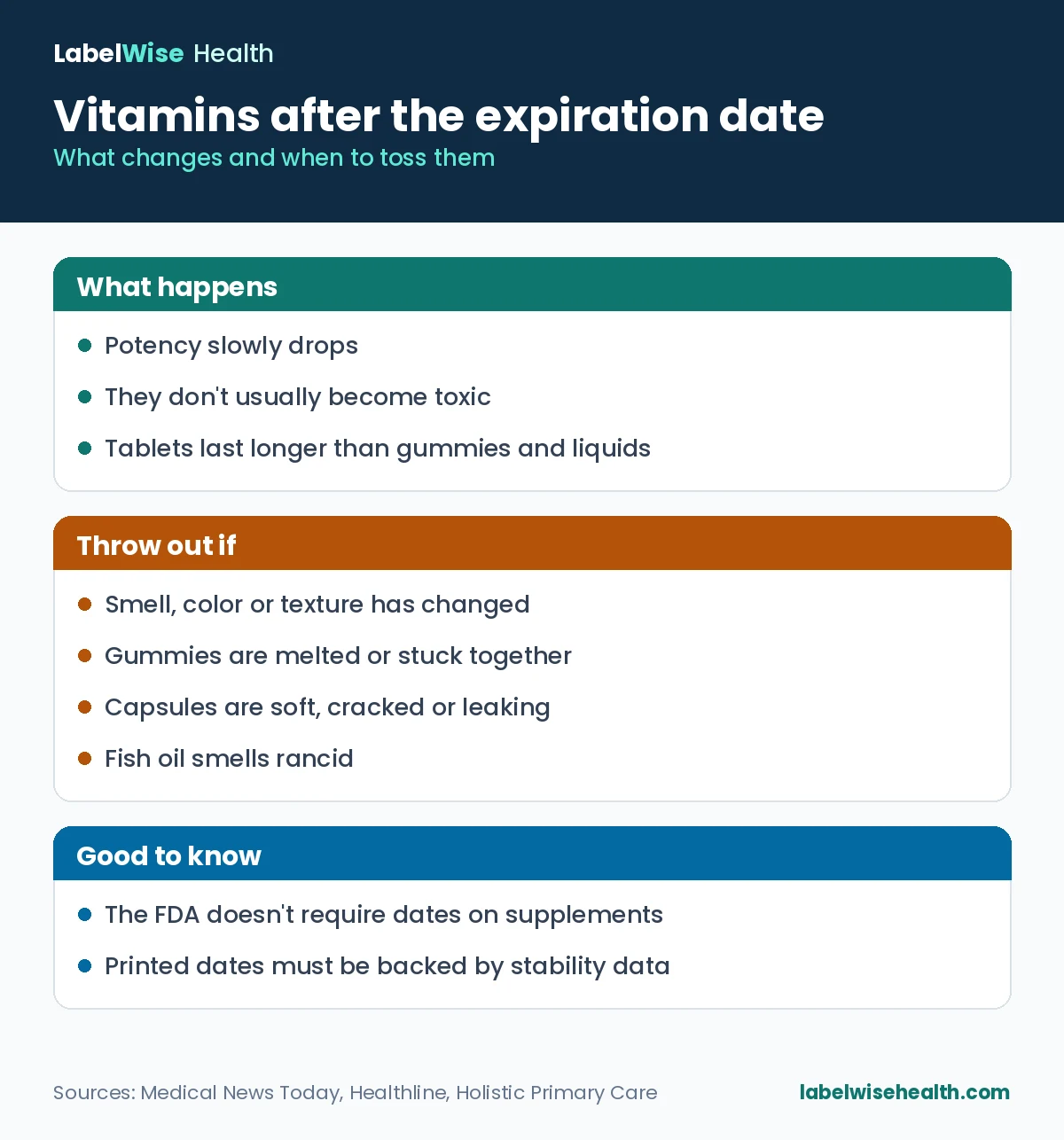
Frequently asked questions
Is it safe to take expired vitamins?
Generally, expired vitamins aren’t dangerous, but they may be less potent. Don’t take any that smell, look or feel different.
Do vitamins really expire?
Yes. They slowly lose potency over time. The FDA doesn’t require expiration dates on supplements, but most brands print one.
How long do vitamins last after the expiration date?
It depends on the form and how they were stored. Tablets and capsules kept cool and dry last longer than gummies and liquids.
Do gummy vitamins expire faster?
Gummies and liquids generally degrade faster than tablets and capsules, especially in heat and humidity.
What should I do with expired vitamins?
Keep them away from children and pets, and use a pharmacy or community take-back program if one is available.
Sources
- Holistic Primary Care: Supplement expiration dating and FDA cGMP rules
- Medical News Today: Do vitamins expire?
- Healthline: Do vitamins expire?
- Greatist: Solid vs gummy and liquid shelf life
This article is for general information and is not medical advice. These statements have not been evaluated by the Food and Drug Administration. Supplements are not intended to diagnose, treat, cure, or prevent any disease. Talk to your healthcare provider before starting any supplement.