Some vitamins are fine on an empty stomach and some aren’t. Water-soluble vitamins, the B vitamins and vitamin C, can be taken without food. Fat-soluble vitamins (A, D, E and K) and multivitamins are better with a meal that contains some fat. Iron absorbs best on an empty stomach but can upset it, so many people take it with food. When in doubt, follow your label.
Affiliate disclosure: we may earn a commission from qualifying purchases through links on this page, at no extra cost to you. Read our disclosure.
The simple rule
Whether a vitamin needs food depends mostly on whether it dissolves in fat or in water, and whether it tends to upset your stomach. Your product’s label is the final word, but this table covers the common cases.
| Supplement | With food or without? | Why |
|---|---|---|
| Vitamins A, D, E and K | With a meal that contains some fat | They’re fat-soluble, so fat helps absorption |
| Multivitamin | With a meal | Contains fat-soluble vitamins, and food reduces stomach upset |
| B vitamins and vitamin C | Either; with food if they upset your stomach | Water-soluble |
| Iron | Best absorbed on an empty stomach, but with food if it causes upset | Food lowers absorption; vitamin C can help it |
| Calcium carbonate | With a meal | Needs stomach acid, which food stimulates |
| Calcium citrate | Either | Doesn’t need stomach acid |

Fat-soluble vitamins need fat
Vitamins A, D, E and K dissolve in fat, not water, so experts at Tufts advise taking them with a meal that contains some fat. Healthy unsaturated fats, like those in plant oils, nuts and seeds, are ideal. A multivitamin contains these too, which is why most multivitamin labels say to take it with food.
Water-soluble vitamins are more flexible
The eight B vitamins and vitamin C dissolve in water. They may be best absorbed on an empty stomach with a glass of water, but taking them with a meal is fine, and better if they make you queasy.
Minerals: iron and calcium
- Iron is absorbed best on an empty stomach, but it can cause stomach upset, so many people take it with or after a meal. Vitamin C helps iron absorption. Only take iron if a healthcare provider has advised it.
- Calcium carbonate needs stomach acid, so take it with a meal. Calcium citrate works with or without food.
If vitamins make you feel sick
- Take them with a meal instead of first thing in the morning.
- Drink a full glass of water with them.
- Move them to lunch or dinner if breakfast is small.
- Ask a pharmacist if the problem continues, especially with iron.
Make it a habit
The best timing is the one you’ll stick to. A simple AM/PM pill organizer kept near where you eat makes “with food” easy to remember. See also how to store vitamins, because the kitchen counter by the stove isn’t ideal.
Two compartments per day, so you can split morning and evening supplements. Look for easy-open lids if you have stiff hands.
Browse AM/PM pill organizers on Amazon →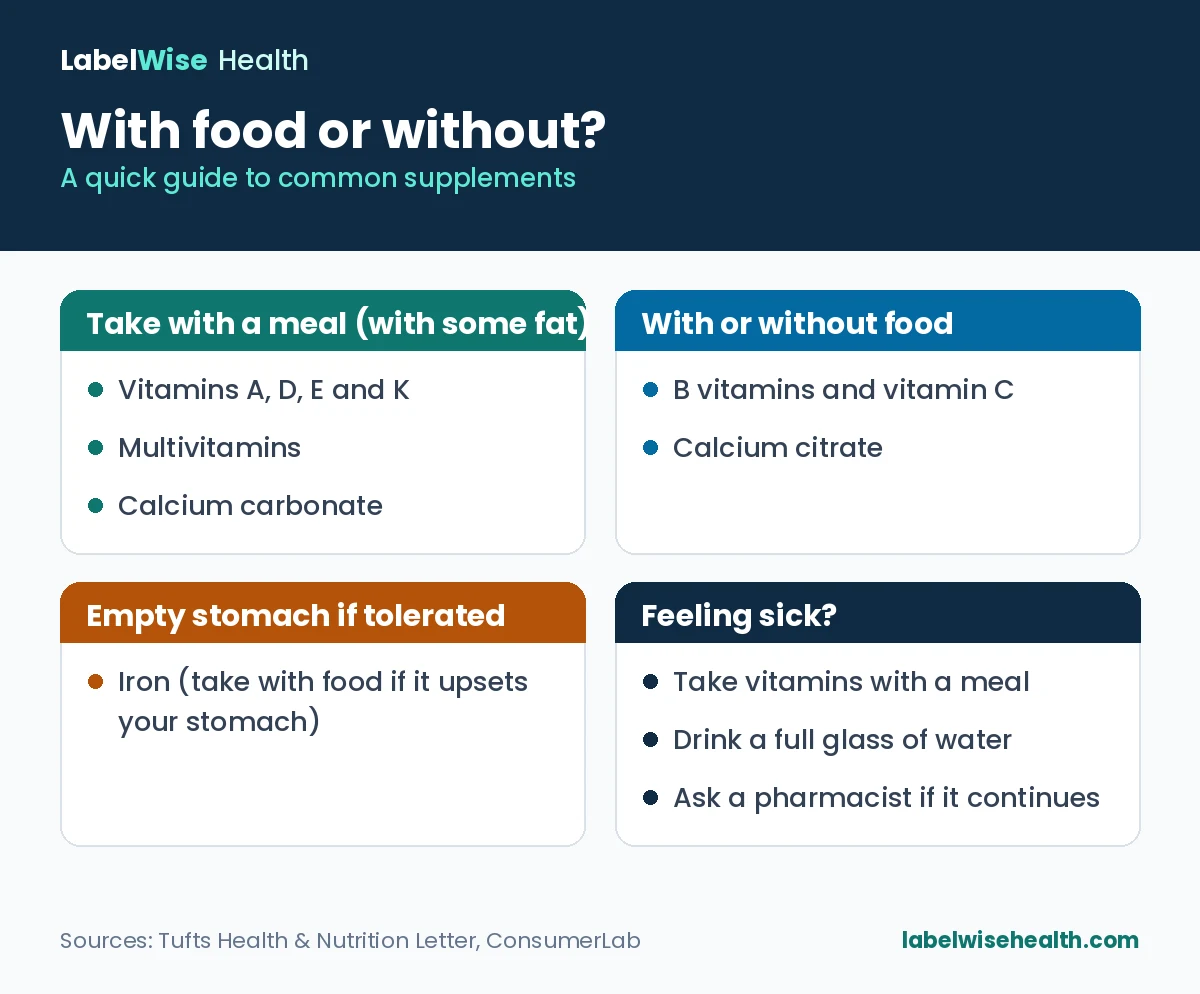
Frequently asked questions
Can you take vitamins on an empty stomach?
Some, yes. Water-soluble vitamins like B vitamins and vitamin C can be taken without food. Fat-soluble vitamins (A, D, E and K) and multivitamins are better taken with a meal that contains some fat.
Why do vitamins make me nauseous?
Taking them on an empty stomach is a common cause, especially iron and multivitamins. Try taking them with a meal and a full glass of water.
Should I take a multivitamin with food?
Yes. Multivitamins contain fat-soluble vitamins, and taking them with food helps absorption and reduces stomach upset.
Is it better to take iron with or without food?
Iron is absorbed best on an empty stomach, but it can upset the stomach. Taking it with or after a meal is fine if that happens. Ask your provider about iron.
Does it matter what time of day I take vitamins?
Less than whether you take them with food when needed. Choose a time you’ll remember every day.
Sources
- Tufts Health & Nutrition Letter: Taking supplements with food
- ConsumerLab: How to take vitamins
- Cooper Aerobics: Can you take vitamins on an empty stomach?
This article is for general information and is not medical advice. These statements have not been evaluated by the Food and Drug Administration. Supplements are not intended to diagnose, treat, cure, or prevent any disease. Talk to your healthcare provider before starting any supplement.